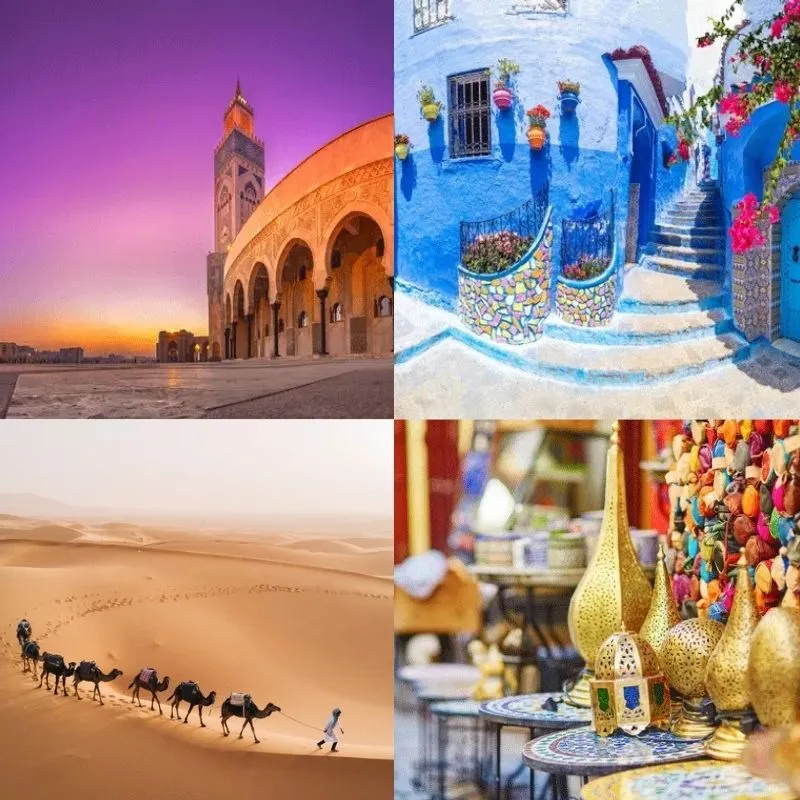
Maand voor maand: wat te verwachten van het weer, de drukte en de woestijn — plus de twee maanden die we afraden voor wie voor het eerst komt.
Marokko heeft een mediterraan klimaat aan de kust en een continentaal klimaat in het binnenland, dus "wanneer ga ik?" hangt vooral af van wat u wilt zien. De woestijn is het strengst van juni tot augustus en het mildst van oktober tot april. De Atlas heeft sneeuw van december tot maart. De steden zijn aangenaam van september tot mei. Hieronder een eerlijk overzicht per seizoen.
De klassieke answer is March to May or September to November. Spring brings wildflowers in the Atlas, the Valley of Roses blooms pink in April-May, and the desert is comfortable. Autumn does the same in reverse: temperatures drop to pleasant from the summer high, the dunes are still warm at night, and the imperial cities are at their best.
December to February is winter. Marrakech and Fes get cold at night (5-10°C) and can rain. The Hoge Atlas has snow — the Tizi n'Tichka pass occasionally closes for a few hours, though it's almost always open by mid-morning. The desert is the trade-off: days in the Sahara are 18-25°C and gorgeous, nights drop to 0°C. You will need a warm jacket. The reward is empty dunes; this is the slowest tourism month and your photos will have nobody else in them.
Juni tot augustus is zomer. Marrakech haalt regelmatig 42°C; de woestijn 45°C+. We rijden 's zomers nog steeds woestijntochten, maar passen het schema aan: vroeg vertrekken, laat aankomen, veel zwembaden. De Atlantische kust (Essaouira, Asilah, Agadir) is perfect in de zomer — 25°C, oceaanbries.
The two months we'd avoid for first-timers: late July and August. The heat compresses what you can see in a day; the southern circuit becomes a logistical exercise rather than a pleasure. If those are your only available dates, we route you north and west — Chefchaouen, the Atlantic coast, the cederwouds of Ifrane — instead of through the Sahara.
Ramadan vraagt apart aandacht. De data verschuiven elk jaar (de Islamitische kalender is maan). Tijdens Ramadan zijn de meeste restaurants overdag dicht, het ritme van de medina is anders, en de avonden zijn buitengewoon levendig — Iftar rond zonsondergang, dan koffies en zoetigheden tot middernacht. Toeristisch werkt het, maar het is een ander Marokko. Vraag het ons en we vertellen of het overlapt met uw data.