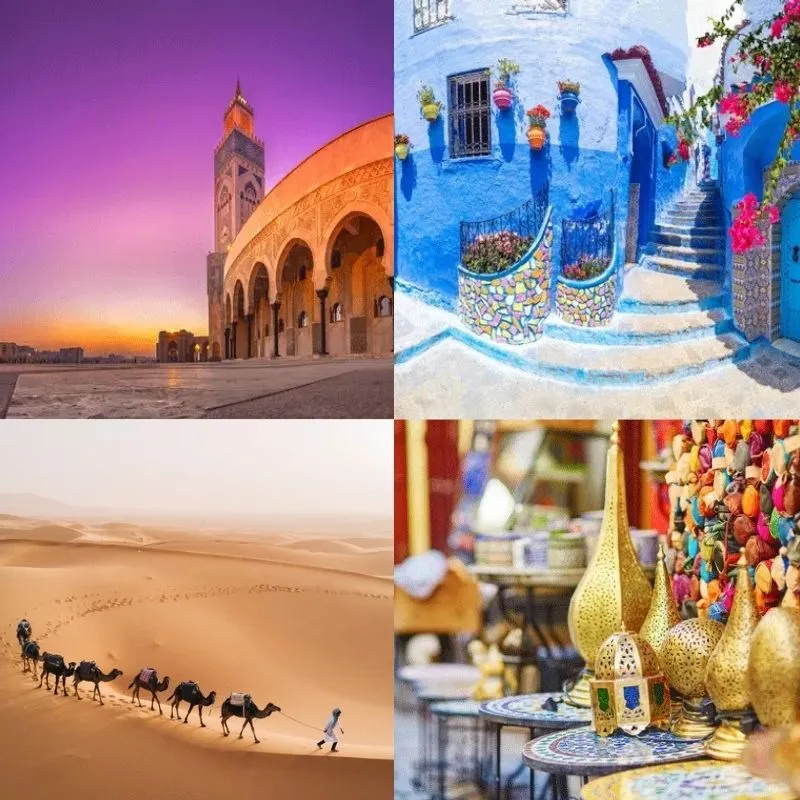
按月解析:天气、人流、沙漠——以及我们建议初次到访者避开的两个月份。
Morocco has a Mediterranean climate on the coast and a continental climate inland — which means the answer to "when should I come?" depends on which Morocco you want.
The classic answer is March to May or September to November. Spring brings wildflowers in the Atlas, the Valley of Roses blooms pink in April-May, and the desert is comfortable. Autumn does the same in reverse: temperatures drop to pleasant from the summer high, the dunes are still warm at night, and the imperial cities are at their best.
December to February is winter. Marrakech and Fes get cold at night (5-10°C) and can rain. The High Atlas has snow — the Tizi n'Tichka pass occasionally closes for a few hours, though it's almost always open by mid-morning. The desert is the trade-off: days in the Sahara are 18-25°C and gorgeous, nights drop to 0°C. You will need a warm jacket. The reward is empty dunes; this is the slowest tourism month and your photos will have nobody else in them.
June to August is summer. Marrakech regularly hits 42°C; the desert hits 45°C+. We do still run desert tours in summer, but timing shifts: 5am sunrise rides, lunch and a long siesta in the shade, sunset dunes. The coastal cities (Essaouira, Tangier, Asilah) stay 25-28°C and full of holidaying Moroccans.
The two months we'd avoid for first-timers: late July and August. The heat compresses what you can see in a day; the southern circuit becomes a logistical exercise rather than a pleasure. If those are your only available dates, we route you north and west — Chefchaouen, the Atlantic coast, the cedar forests of Ifrane — instead of through the Sahara.
Ramadan is its own consideration. The dates shift each year (the Islamic calendar is lunar, so Ramadan moves about 11 days earlier each Gregorian year). During Ramadan most restaurants close during daylight hours but open spectacularly at sunset. Tourist sites stay open. If you don't mind some adjustments, Ramadan is actually a fascinating time to visit — the iftar meal is a daily celebration, and the cities feel more communal than usual.